27 November 2026
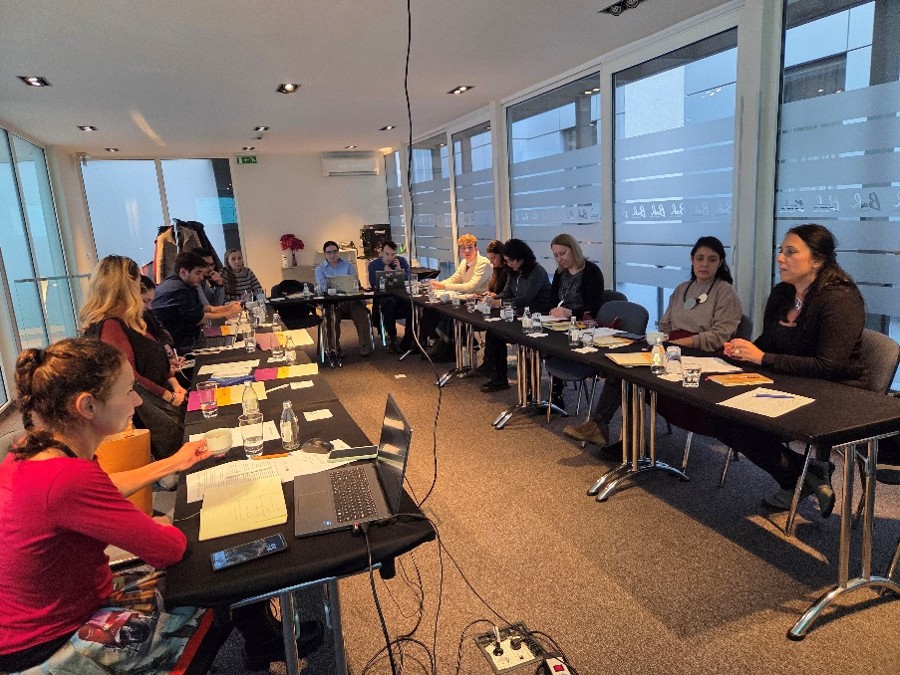
On Thursday, 26 November, the third meeting of the National Digital Inclusion Platform was held, bringing together representatives of national institutions, the EU Delegation, and civil society organisations active in the field of inclusion and digital inclusion.
Members of the Platform continued their work on advocating for online safety, with a particular focus on persons with intellectual disabilities, and agreed on two priority initiatives. The National Platform will send two initiatives to the relevant ministries, presenting recommendations and calling for involvement of relevant stakeholders in consultations during the drafting of legislation envisaged under the Law on Information Security, as well as the finalisation of the Draft Law on Artificial Intelligence.
During the discussion with the EU Delegation to the Republic of Serbia, the National Platform identified its priority for the coming year: monitoring the implementation of Reform 7.2.3, which focuses on strengthening adult education, training and relevant opportunities for developing digital skills and literacy, as well as establishing digital corners. The Platform will ask from relevant institutions to include its members and other relevant stakeholders in the consultation process to help ensure that these digital corners are inclusive and services provided are of good quality.
During the meeting, members of the Platform were also presented with the pilot version of the “ConnectMe “(“PovežiMe” ) online platform, developed as part of a local initiative by the partner organisation, the Association of Psychologists Novi Pazar. The initiative was welcomed by Platform members, who agreed to establish strategic partnerships aimed at further developing the platform and ensuring the provision of high-quality training opportunities for its users.
The Digital Inclusion Initiative (DII) project is funded by the European Union and aims to strengthen the role of civil society organizations across the Western Balkans in promoting participatory democracy and supporting the EU accession process. The project enhances the capacity of CSOs to contribute to policy development and advocate for digital inclusion, ensuring that no one is left behind in the digital transformation.